Where are you going?

Author: SameSame

Merato Fez

Free Walking Tour goes abroad and speaks Italian

Free Walking Tour Italia goes abroad!

How long we’ve waited to write something about this. All of a sudden, the publication of an article about the Free Walking Tour Padua on a local blog gave us the opportunity to speak up. It caused a small earthquake at the local level that quickly spread nationwide. The GTI – the national Tour Guide union – had to intervene. We hoped it would open up room for analysis and reflection, but it ended up, as always, turning into a playground for keyboard warriors. Every time, it follows the same script. It’s sad to realize that, in the last 10 years, very little has changed from within, while outside a revolution is taking place.

Free Walking Tour Italia was born as a community-based project aimed at gathering and connecting the existing local Free Walking Tour experiences under the same online framework. We managed to create the first — and still the only — Italian network of its kind. However, after a few years, the members’ energy gradually faded away, partly due to the lack of a shared vision. Covid-19 did the rest. Nevertheless, the format spread, and many people in Italy became familiar with it, for better or worse. Italians have never been into tips-based activities. In fact, most Free Tour offers have always been directed at foreign travelers. The few Italians who knew the concept had usually discovered it abroad.

Today, the situation is quite different. We are witnessing a change in customer behavior: more and more Italians are actively looking for the Free Walking Tours when traveling. We like to think that, on a small scale, we’ve somehow influenced ths change. Are we overly presumptuous? Maybe. The Italian case resembles the Spanish one in many ways. Spain and Italy share several common features: both are Southern European countries, both have relatively low levels of English proficiency, and neither has a strong tipping culture. Most of the major players in today’s global Free Walking Tour market are based in Spain: GuruWalk, Civitatis, and Buendia Tours. Since the beginning, they have all applied a smart market strategy by focusing on the local market. This means offering Free Tours in Spanish — because, like Italians, Spanish people are unlikely to choose activities in foreign languages. This creates a virtuous cycle in which the initial investments pay off: today, Spanish travelers represent a well-aware and structured customer base. This trend is reflected in Italy as well, where the Spanish-language offer has grown enormously, sometimes even surpassing the English-language one. Since 2023, Spanish contacts — those we have been able to track on our platform — have consistently increased, with a growth of 165%.

Given these similarities, we expect the Italian market to follow the same path. The analytics are quite promising. Since the birth of the network, we have always dedicated part of our offer to Italian-speaking customers traveling within Italy. Sometimes it paid off; other times it didn’t. We do not want to reinforce the stereotype that portrays Italians as people who take advantage of situations. The tipping habit simply does not exist in Italy. You need to make an extra effort to raise awareness around it. It takes time. We have always said: “It will come. And when it comes, it will boom!” There are more than 60 million Italians, they travel frequently, and many of them do so on a budget — especially considering that salaries in Italy have stagnated since the 1990s. If you combine these variables, the outcome can only be promising. Last year, we translated the website into Italian and expected an increase in Italian requests. In 2025, the number of Italian contacts remained in line with previous years, but this year we have already reached 85% of last year’s total contacts. So what did we do? We stepped up. We are investing in Italian-language offers not only in Italy, but also abroad.

Yeah, you heard it right. That’s the big news. We believed that, as an Italian network, we had a competitive advantage: Italian customers would be more inclined to book a Free Walking Tour abroad through a platform that speaks their language and feels familiar to them. After all, people tend to choose what they know. The goal is clear: to become the leading platform for Free Walking Tours in Italian. We are working hard toward it, and the results are yet to come. You can now book Free Walking Tours in Italian in many European and Mediterranean destinations. Take a look on the Abroad Tour section.

Esame di abilitazione

A Supposedly Fun Thing We’ll Never Do Again: the Qualification Exam for Tourist Guides

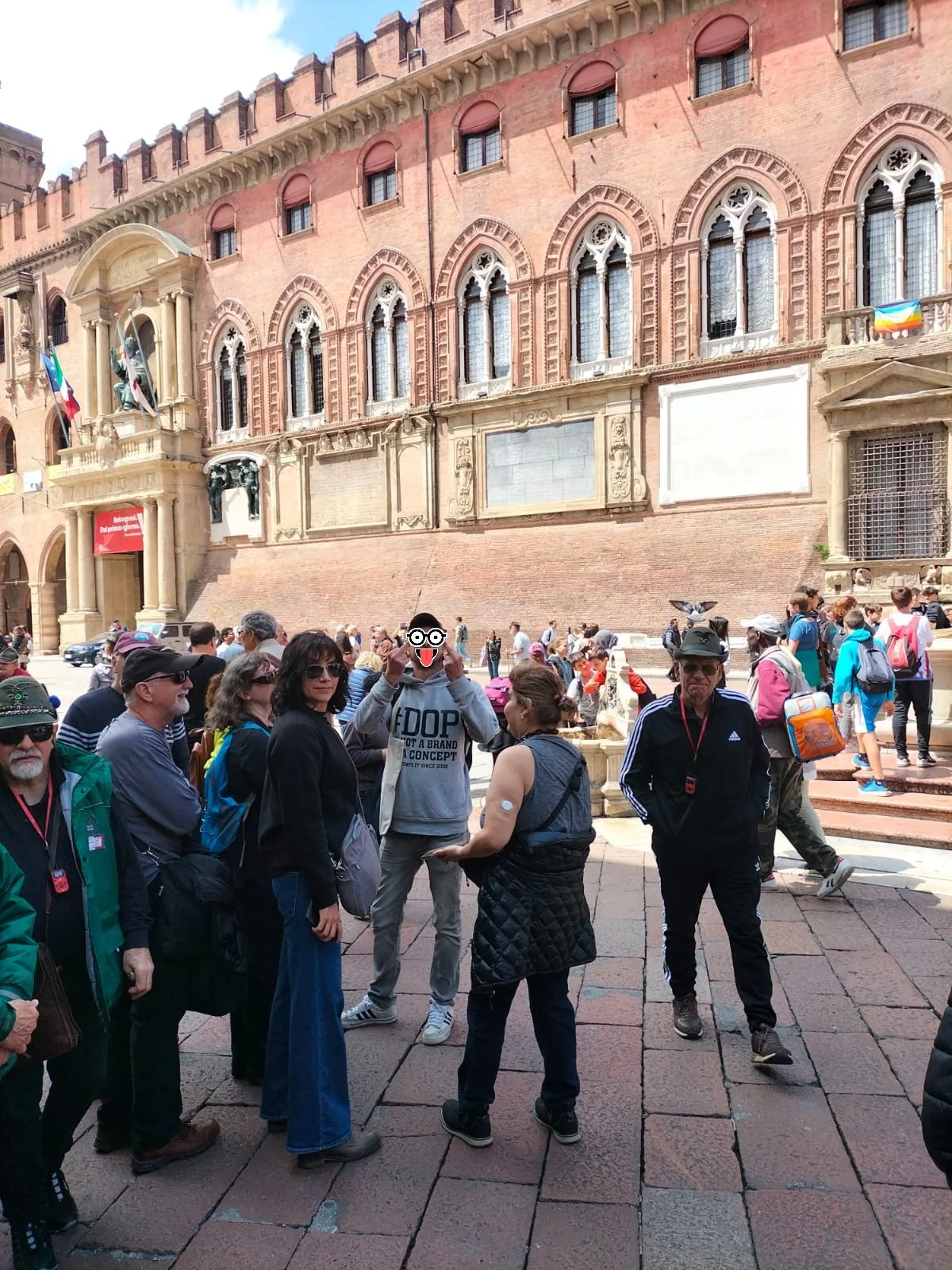
Last Tuesday, we were at the Ferrara Exhibition Center, together with thousands of would-be tour guides.

We witnessed History: it had been 8 years — e-i-g-h-t — since a qualification exam for the tourist guide profession had been held in Emilia-Romagna, just like in many other Italian regions. In these 8 years, the tourism world has changed radically. Italy, however, partly out of inertia, partly because of toxic corporatism, partly due to incompetence, kept the status quo. Then, plot twist: one of the most conservative governments of recent decades did something unexpected, it started reforming the sector. Expectations were low; the result met those expectations. But hey, we appreciate the effort.

9:03 a.m., Ferrara Sud exit. The weather forecast promised a sunny morning. Instead, we are greeted by rain and autumn gloom. We park. In the distance, hundreds of people lined up as if awaiting execution: tense faces, disillusioned looks, few smiles. We hand out some good-luck wishes, leave a few business cards, and join that suspended mass of humanity. Soon, disillusion would turn into despair. Meanwhile a hater in the crowd spews some frustration mixed with envy at us, calling us “parasites”, “illegals,” “fraudsters” and so on. He unlocks some old youthful memories.

Pavilion 3 is overflowing. They make us sit in orderly rows, spaced a few meters apart from one another. On the camping table — and yes, it’s exactly the one from Decathlon— only an iPad, an ID, and water. Some parts of the short introductory speech by the President of the Examination Committee strike me: <<Don’t be nervous, this is not the exam of your life!>>. Well… considering that some people have been waiting for this exam for years, that many have gone underground or spent thousands of euros to get certified abroad just to be able to work, it may not be the exam of a lifetime, but for many it’s a meaningful moment. Some made sacrifices to be here. A little respect, Mr. President!

As for the complexity of the exam, no complaints. Since I didn’t even bother to ask ChatGPT for a summary of everything being tested, my chances are basically zero. I cling to hazy school memories, a bit of general knowledge, some history, and reading comprehension. The answers I’m sure about don’t even reach 20. Oh well.

After 90 minutes, when the test ends, in an atmosphere now saturated and unhealthy, we start filing out. So much sadness and disappointment on people’s faces. Among those who invested everything and those who did it for the plot, we try to gather some feedbacks: <<Fuck off!>>, <<You don’t want to work with me!>>, <<Make sure you get paid>>. We get the hint and walk away, confirming what we already knew: the qualification exam is not a solution to the sector’s chronic stagnation but part of the problem. Intended as a tool to assess competence, it has become a mechanism to prevent access to the profession rather than regulate it, ending up creating actual castes. Over the years, we’ve often found ourselves dealing with gerontocratic, rigid, closed structures, more interested in protecting their own interests than in generating culture. Just as clothes don’t make the monk, a badge doesn’t make a good tourist guide. And on this, we all agree.

Illegal Tour Guides

In Bologna we got a problem, and it’s not the unregulated tour activity

A few weeks ago, we received notice from the Metropolitan City of Bologna about the launch of an awareness campaign against illegal guiding, titled “STOP Illegal Guides” The initiative is promoted by Confguide, Confcommercio Ascom Bologna, and supported by the Municipality, Bologna-Modena Tourist Territory, TPER, and Bologna Welcome.

The campaign claims the ambitious goal of informing tourists about the consequences of an ill-advised choice: hiring unlicensed individuals to lead city tours. This would be done through the printing of 500 flyers and the installation of information points across the city. Around the same time, headlines were made when a retired teacher in Bergamo was fined for accompanying a group of people from an association on a tour of the city – despite not holding the proper qualifications. While illegal guiding is a serious issue that harms both professionals and tourists and should be addressed accordingly, we must also acknowledge that such limited campaigns are unlikely to have any real effect.

Let’s be clear: the issue is not the retired teacher – who has our full support. The Bologna initiative, in fact, omits several key details that would help us better understand a much more complex problem. Let’s take a step back.

Many may not know that in Italy, to lead guided tours one must hold official certification, obtained by passing an exam and receiving a license as a tourist guide and/or tour leader. Let’s set aside the longstanding debate about the difference between these two roles, and focus on the former. As of today, there is no national law clearly regulating the profession. Instead, the responsibility falls to the regional governments, resulting in a confusing patchwork of legislation that complicates rather than simplifies the situation.

Navigating this maze of regulations is difficult. Many either get lost in it or, more often, simply sidestep it.

In recent years, with the tourism boom in many Italian cities – Bologna being a prime example – the demand for tourist services has surged, while the supply has diversified. The traditional circuits have failed to meet this demand, due to shortsightedness, lack of vision and capacity, or simply because the numbers were overwhelming. As a result, a shadow market has emerged, made up of individuals with varying degrees of qualification, who have stepped in to fill the gap.

After the Covid-induced “pause” – which further exposed the sector’s weaknesses – tourism numbers this year are expected to return to or even exceed 2019 levels. Bologna, like many other cities, is completely unprepared, with a fragmented and quantity-driven reception system. Many accommodations closed during the pandemic never reopened, and many professionals have moved on to more stable sectors.

Illegal guiding is nothing new – it has always existed across the tourism industry and has, at times, been tolerated or even tacitly supported by institutions when convenient. Yet, we’re told that 3,500 jobs have been lost due to illegal guides (Ascom Bologna data), while very few unlicensed guides are ever officially reported. Is it that we don’t know where to look? Or is the problem exaggerated?

As usual, the truth lies somewhere in between. There are numerous platforms, mostly international, that offer tours led by individuals who are not always certified to do so: Guruwalk, Freetour, and even Airbnb are just a few. And it’s not hard to verify – names, times, and meeting points are publicly listed. Yet we see statements rather than action.

The campaign also fails to mention a crucial fact: the person “taking work away” from licensed guides – the so-called illegal guide – may not have skipped the exam. They may simply have never had the opportunity to take it – because the exam no longer exists. That’s right: in Emilia-Romagna, courses and licensing exams for tourist guides have not been held since 2016. Today, anyone wishing to become a certified guide simply cannot, unless they go abroad – and indeed, some have traveled to Romania just to obtain the title.

Thus, the very system meant to protect the profession – the licensing exam – ends up doing the opposite: it creates the perfect environment for illegal guiding to thrive. The problem is not a lack of work – quite the contrary. The problem is a shortage of qualified guides.

A glance at the provincial registers reveals the gap: among hundreds of listed names, less than half are actively working – many do so occasionally, and most are in late adulthood or older. Since the introduction of licensing, there has been no generational turnover.

We need a new culture of hospitality.

chiaroscuro

Chiaroscuro, rehab-community workshop

The Smell of Mud and the Silence of the Tiber

Flavio is the one speaking. Forty years old, Roman, a former drug addict. He is a guest at the therapeutic community La Torre in Modena, managed by the CEIS group. From June to September last year, within the framework of the “Inclusive Environment” project, sponsored by CSI Modena, our association developed a program together with the residents of the facility, called Two Hours of Fresh Air – initially designed for people in pre-trial detention.

The program involved eight young men and women from the rehab centre. During the ten sessions held at La Torre — interspersed with some preliminary urban exploration outings — the participants engaged in a creative journey reflecting on the city. The methodology was diverse: from group games to creative writing, from drawing to critical mapping, including public speaking exercises.

The final result was the creation of a city-guided tour in which the young participants took center stage, linking places and symbols of the city to their personal life experiences. The itinerary took the form of a narrative performance in acts, with a chiaroscuro tone.

“Seeing the city through different eyes is an exercise in abstraction. It projects us into someone else’s world: their experiences, traumas, fears. But also their abilities, resources, hopes,” says Giovanni Bottari, creator of the workshop. “Every personal story is made of light and shadow. Learning to listen opens us to connection — not only with others, but also with ourselves. This workshop was a deeply meaningful experience for me, and one I’d like to share. I believe it’s also important for the participants to engage with a public dimension. We are finally ready for this big step.”

Walking Industrial Heritage

WALKING INDUSTRIAL HERITAGE: promoting Industrial Tourism in Emilia Romagna

Why Churches rather than Factories?

A simple question, almost naive, like the one a child asks a parent: but why? There is no answer. It is what it is. The grown-ups decide.
But the child refuses to accept it – it’s not fair: he wants to go and see the big industrial warehouses. Just like us.

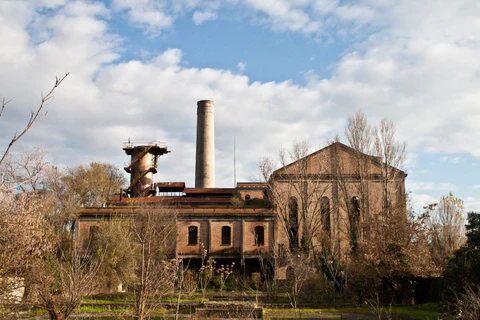
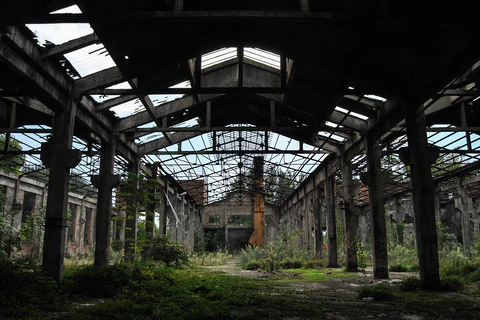
So let’s return to the question: why choose to enhance a 15th-century church and not an old early-20th-century sugar factory – the former fully restored while the latter is now in ruins? The distinctive and identifying features of a territory are a social construct; they do not exist in nature. The choice – church or factory – is made by the community and its decision-makers.

In recent years, tourism promotion in our country has followed a unique way: squeezing the art cities and historic centers to the point of collapse. The images of turnstiles in Venice speak for themselves. Great, we tourism professionals might say, rubbing our hands. But then the pandemic hits: more than anything else, COVID-19 called that model into question. And for a brief moment – summer 2020 – people started talking again about local tourism, only to revert, once the country reopened (and then closed again), to business as usual.

What did we learn? Nothing. We perhaps missed an opportunity. In light of the challenges and critical issues highlighted by the pandemic, now more than ever we need to look beyond and try to imagine a complementary tourism horizon, starting from our widespread heritage. But what kind of heritage? Factories, of course.

Our territory is scattered with industrial relics: foundries, mines, workshops, breweries, manufacturing plants, assembly lines, power stations, workers’ villages, and offices – all have become part of the urban landscape and of our past and present history. A heritage we absolutely do not want to lose.

Through meetings with various local communities and the networking of unique territorial promotion practices, we’ve created a new path:
We call it the Route of the Industrial Heritage of Emilia-Romagna.

The project WALKING INDUSTRIAL HERITAGE ER – Industrial Tourism Routes in Emilia-Romagna includes several cities along the Via Emilia: from Parma to Forlì, passing through Reggio Emilia, Modena, and Bologna.

The project aims to enhance the regional industrial heritage through three main actions:

  • Dissemination: organizing conferences and themed talks on industry and tourism

  • Training: for tour guides and industry professionals on industrial routes

  • Promotion: through events and guided on-site tours


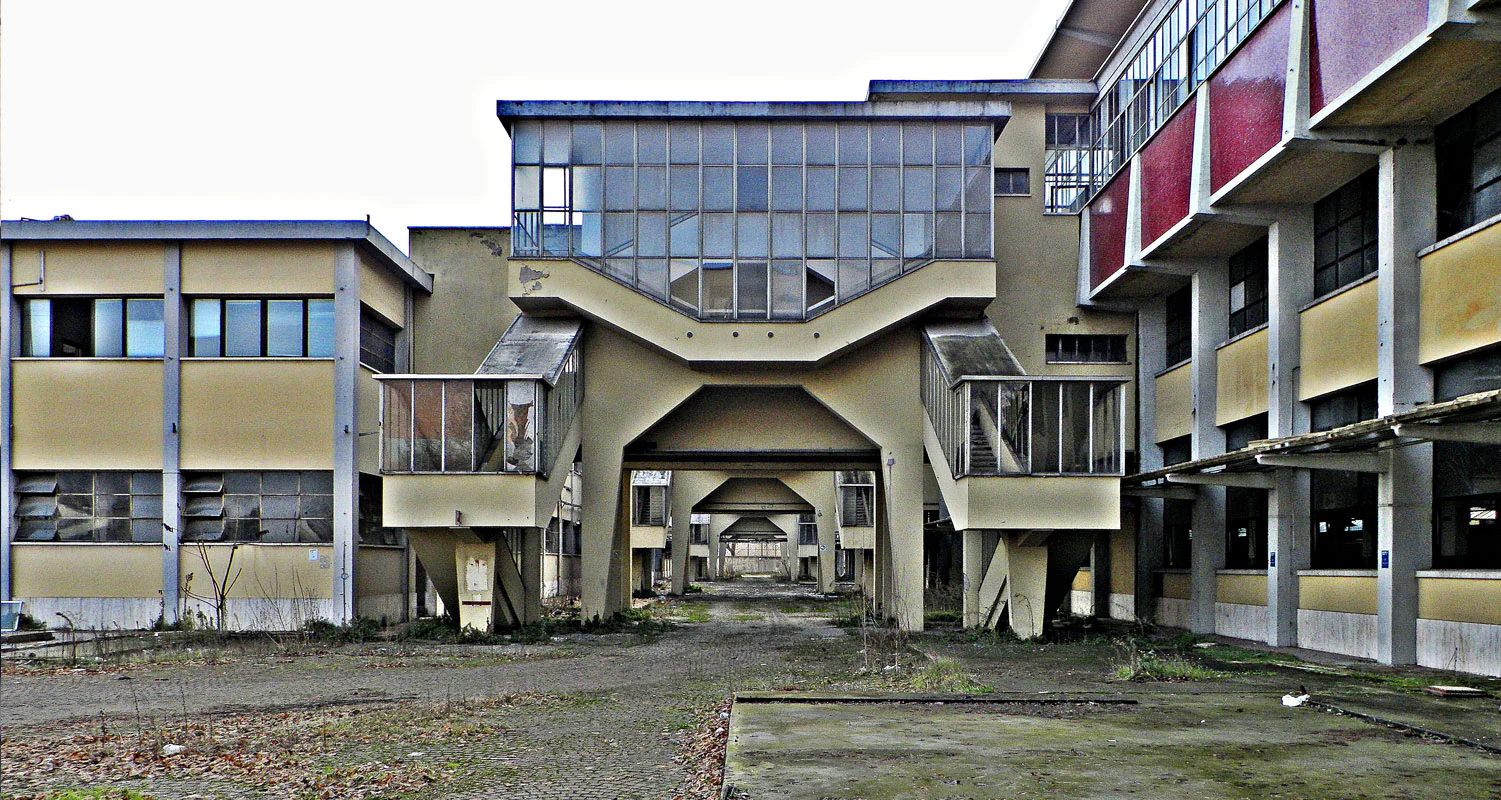
The project will officially kick off with a public event at the former Scalo Ravone in Bologna, now Dumbo Bologna, at Via Casarini 19. There will be a brief presentation by the project partners, followed by a tourist itinerary through the Porto district, exploring the history of the Popolarissime (working-class housing), the stories connected to the former Grandi Riparazioni workshops of Bologna, ending in the Dumbo spaces, now fully regenerated and dedicated to culture.

The Industrial path continues toward Reggio Emilia for a tour of the working-class district of Santa Croce esterna, which developed in osmosis with one of the area’s largest industrial complexes: the Officine Reggiane.

It ends in Modena for an evening walk along the railway.


This project is ambitious but still evolving – and, most importantly, eager to expand the network, which currently includes Free Walking Tour Italia, Spazi Indecisi, Save Industrial Heritage, and Musei Urbani.

Between church and factory, we always choose the factory.

Ex Fonderie Riunite Modena

ITER.DIFFUSO | Shared Historical Memory in Modena Neighbourhoods

What is the difference between a 14th-century church and an old disused factory from the early 20th century? What do these two places tell us about our city? And most importantly, why do we choose to preserve the first and abandon the second?

It’s a matter of meanings and visions, often opposing. Take, for example, a guided city tour and what is offered as tourist highlights: you will see how it begins and ends within the city walls, in the historic center. As if nothing else exists beyond, as if the city’s history had stopped at a certain point in time. The choice of which era to value is, of course, a political decision. Yet, those of us who live Modena know that the city is rich in other meanings, but especially elsewhere. We only need to widen our gaze.


The cultural itinerary series focused on the city’s peripheral neighborhoods, called ITER.DIFFUSO | Paths on the Historical Memory of the Neighborhood, aims precisely to look at that “elsewhere,” focusing attention on the other city—the city that escapes, that runs along the railway and develops in working-class and popular districts. For the first time, Free Walking Tour Modena offers two routes centered on District 2 and the northern area of the city.


We will start with a walk on the water, an important development axis of the proto-industrial city, before railways and road transport. The tour is named in honor of the Darsena di città, today a parking lot beyond the railway. In fact, with the construction of the railway, Modena’s port area was moved from Corso Vittorio Emanuele to its current location. The surrounding neighborhood grew and developed with the manufacturing and industrial sector that arose along the waters and the “port.” The first date is set for Sunday, June 6 at 6:00 p.m. (the second on June 20), starting from Piazza Roma, in front of the Accademia. We will be joined by volunteers from Modena Sobborghi, a youth association engaged in urban regeneration of the area, and architects from G124—the working group led by Senator Renzo Piano focused on suburbs and the city of the future—who will present the recently completed project for the redevelopment of Parco XXII aprile.


From the water, we will move to the railway tracks, telling the story of industrial and working-class Modena. This itinerary along the railway aims to recount Modena’s industrial heritage, made up of old buildings as well as new urban regeneration projects. It is a part of the city where not only architectural gems hide but also history and memories that resurface at every corner. The former Manifattura Tabacchi, Pallamaglio, Popolarissima, the old Frigoriferi Adami, Garage Ferrari, and the former Oleificio Benassati will be just some of the places touched by the tour.

Path nr.1: Cith Harbor

Path nr.2: The Industrial Town

Street Art In Ravenna

Street Art Tour in Ravenna: Urban Art & Graffiti

We live in an era of architectural labyrinths, shaped by the rules of urban planning—and we live right in the middle of them. Murals and writings on the walls offer a passage, an interaction, a trace, a point of reference—sometimes even monumental breadcrumbs—a thread of Ariadne. The only way to truly find your way is by getting lost: drifting is how we explore our psychogeographic surroundings.

Free Walking Tour Ravenna, in collaboration with tour guide Elisabetta Borda, launches the city’s very first guided tour series on urban art. “We’ve chosen to break the route into two different chapters, each offering a distinct experience.”
The first is set in the Darsena di Città, a transitional area where the illegal and ephemeral nature of street art begins to evolve—taking on a new role as a tool for urban regeneration.

The second tour—by bike—explores Via Tommaso Gulli and its surroundings, all the way to the so-called “Cittadella della Street Art”, on the outskirts of the suburban fabric. The murals created during various editions of the Subsidenze Festival reshape the neighborhood’s appearance and become the framework for a dialogue between individuals and the built environment.


The tour begins in the Almagià area, a former sulphur production plant now fully regenerated.
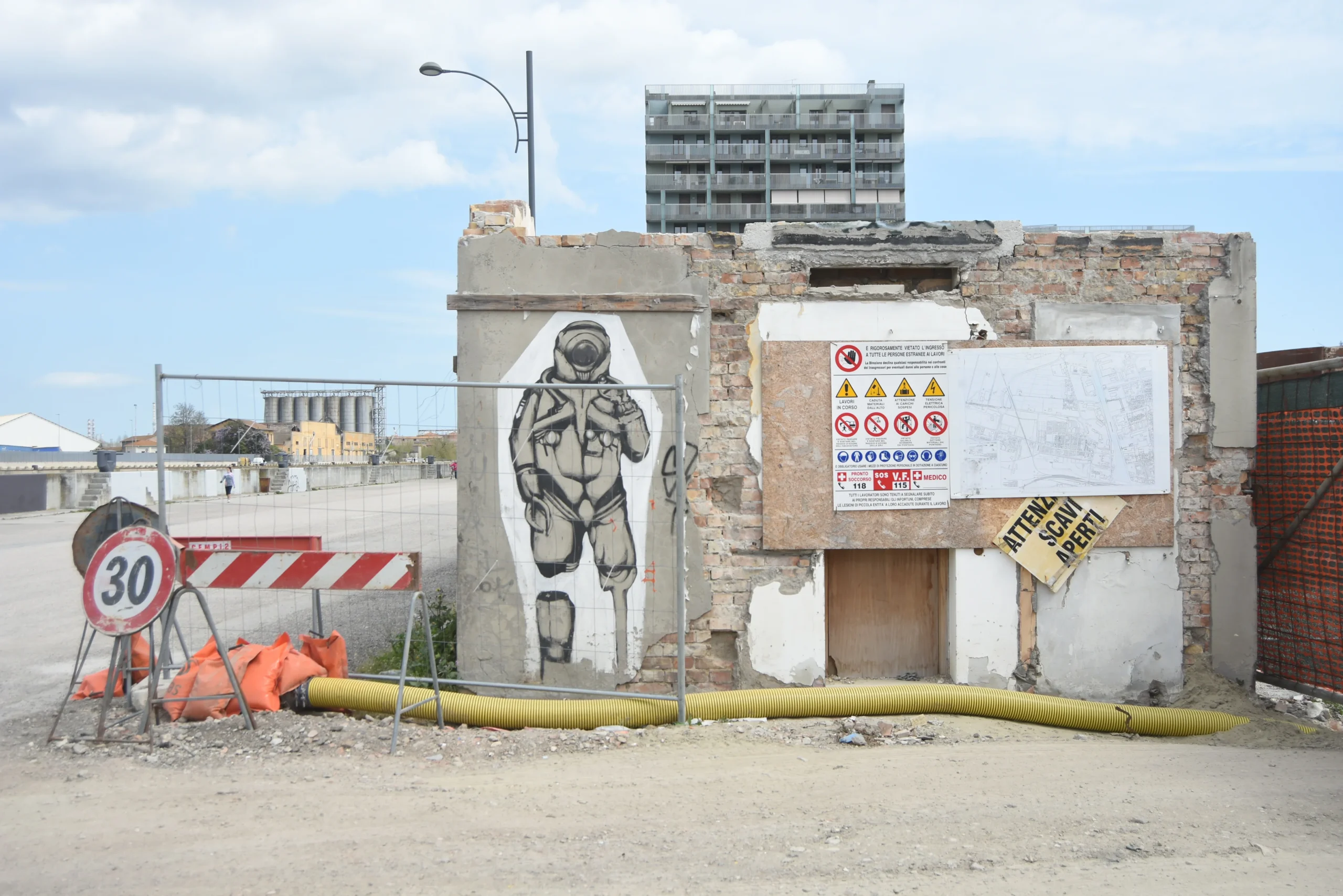
Here we meet our first artist: Hope. Originally from Apulia, Hope lives and works between Italy, Brazil, and Spain. His suspended worlds and galactic imagination capture the enchantment and emotion of childhood memories—of a little cosmonaut. The piece, entirely spray-painted, dates back to 2016.

Another featured artist is About Ponny, who uses stencil masks and paints simply for the joy of doing it. His portraits don’t always carry a clear message: the faces speak for themselves—it might be Gandhi, Lucio Dalla, or the archetypal child, symbolizing innocence. Walking along the Canale Candiano, we encounter “Il Dottore”, a collective mural created in 2011 by about 20 artists as part of the “Romagna in Fiore” event. A very different vision comes from Dissenso Cognitivo, a Ravenna-based artist collective founded in 2012. We’re not sure whether they’d approve of being included in a guided tour—they don’t define art as a tool for urban regeneration and prefer non-institutional spaces.

Their works are spread throughout Ravenna and its province: wall paintings and rust-toned murals that reflect a controversial aesthetic—scenes that recall post-apocalyptic sci-fi, or intense fusions of the biological and the technological.


Moving toward Via Tommaso Gulli, the first artist we encounter is Pixel Pancho, at the intersection of Via Trieste and Via Piave. His mural “The Last Kiss”, created for the 2015 Subsidenze Festival, draws from his fascination with robotics. His “mechanomorphic” poetics give human emotions to mechanical bodies, undermining their perfection.

Deeper into the neighborhood, we find Jim Avignon and his “City of Memories”. His mural, also painted for the 2015 festival, was featured in a Sky Arte documentary on Italian street art. A German-born artist, Avignon is a street artist through and through—painter, illustrator, and musician. His style takes cues from pop art and comics. The monumental melting pot of Via Gulli evokes a rich blend of identities and memories. We now reach the Cittadella, home to murals by Ericailcane and Bastardilla, an Italian-Colombian couple. Their works, created for the 2019 edition of Subsidenze, face each other on the outer walls of what is now called the “Street Art Citadel.”

Their murals often carry political and social themes, and these two are no exception—both dedicated to April 25th, Italy’s Liberation Day, and painted on the very same date. The locust and the caterpillar serve as metaphors: tiny creatures capable of toppling oppressive systems. The journey ends with the 2021 edition of the festival, dedicated to Dante and Virgil.
Millo (from Mesagne, Brindisi) interpreted the two figures by embedding them into his signature style: giant children towering over miniature cities, blending with the surrounding architecture.

Finally, Luogo Comune (from Cremona) offers a vertical reading of the Divine Comedy, from the dark forest to the celestial heights of Paradise. His impactful mural plays with tones and geometry, condensing elements of composition, design, and color. His artist name—literally “Commonplace”—pokes fun at stereotypes while subtly reinventing them.

Industrial Heritage Walks in Bologna

Have you ever taken an early morning walk along the banks of the Navile Canal, glanced at the ruins of the old factories that once lined its shores, or visited the Museum of Industrial Heritage that preserves the story of Bologna’s silk-making past?

The canal is one of Bologna’s historic symbols, a key factor in the city’s rise to industrial greatness. It was built to channel water into the heart of the manufacturing district, powering tanneries and workshops. Then came the second industrial revolution: water gave way to fuel, workshops turned into industrial plants. Then came crisis, the end of state aid, and globalization.

Today, walking along Via Ferrarese—once traversed by the Bologna–Malalbergo tram line—you’ll find an open-air, post-industrial archaeological park. These are stories of extraordinary deindustrialization. It’s a poetic landscape for those who know how to grasp its subtle tones and uncover its history.

That’s exactly what Free Walking Tour Bologna and Save Industrial Heritage set out to do: tell the story of the city’s industrial and manufacturing past through abandoned factories and waterways. WALKING INDUSTRIAL HERITAGE is a series of industrial-themed walking tours designed to explore the works and stories that made Bologna one of Italy’s leading manufacturing centers.

Welcome to Modena 2029

2019, what a year!

The year is drawing to a close, and it’s time to take stock: we look back at the past months and still wonder how we managed to survive.

It’s been a tough year, full of unexpected events: endless trips overseas, the Amazon rainforest in flames, countless discussions with trade associations, the looming BREXIT, innovative projects that were nearly impossible to complete, the ILVA crisis in Taranto… and yet, we made it!

BUT THAT’S NOT ALL! We achieved incredible results that, just a year ago, seemed completely out of reach!

In 2019, nearly 10,000 people took part in our activities in Bologna, Modena, Verona, Reggio Emilia, and Bergamo alone! Considering that back in 2017 we had just 1,000 participants, that’s not bad at all! Our revenue more than doubled compared to 2018, establishing us as a true new player in the Italian tourism sector — with a unique and diverse offer compared to other operators, and with one key strength: full and direct control over all aspects of our activities, from booking to tour execution.

Despite all the work and challenges, we’ve stayed true to our values and our social mission, which has set us apart since the beginning.
If 2018 was focused on migration and integration — with tours like Sguardi Diversi — then 2019 was all about highlighting the suburbs, creating new itineraries and bringing attention to the Italian cultural and touristic heritage that’s often overlooked. This was made possible thanks to the support of the City of Bologna and the Foundation for Urban Innovation, who partnered with us on this project.

And just when we thought the year had given us everything, two unexpected pieces of good news arrived at the very end:

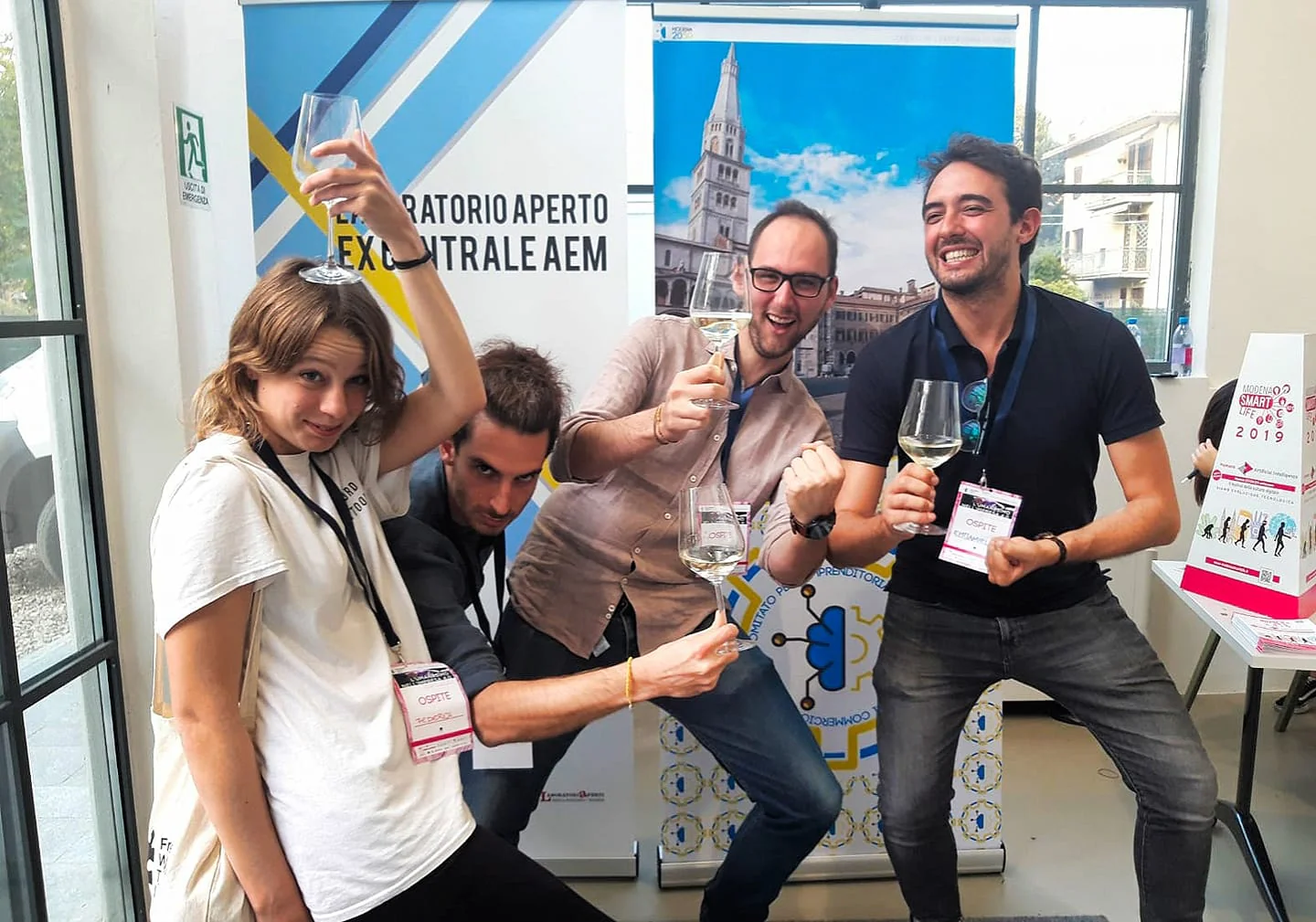
  • We won the Modena Smart Life 2029 Award for tourism innovation with the project ITER Diffuso

  • Our start-up was selected for an acceleration program within the Collisione project

2019 leaves us with a big smile on our faces, proud of all the hard work, happy with what we’ve achieved, and ready to take on the many challenges 2020 will surely bring. We want to thank everyone who supported us and believed in us during these first few years: our collaborators, travelers, friends, and families. If this dream is becoming a reality, piece by piece, it’s thanks to you — for encouraging us not to give up, to do more, and to never settle.

From the bottom of our hearts, the FREE WALKING TOUR ITALIA TEAM wishes you all a fantastic 2020 — full of joy and success.

A big hug from us all!

Neighbourhood Walks

Neighborhood Walks, a project by Free Walking Tour Bologna and the Foundation for Urban Innovation

Six Neighborhoods of Bologna, Six Guided Walks
An urban story exploring forms, relationships, and public space beyond the city walls — through widespread itineraries in search of voices and places that preserve the memory and cultural identity of Bologna’s neighborhoods. We introduce you Neighborhood Walks: Dynamics, Spaces, and Identity begins.

Organized by Free Walking Tour Bologna in collaboration with the Foundation for Urban Innovation and with the support of the Municipality of Bologna, the initiative aims to give voice to the city beyond the Towers — a city that is often overlooked but which lives, buzzes, breathes, and regenerates. Its name is still Bologna, but it reads as Borgo Panigale, Porto, San Vitale. These places may not appear on traditional tourist maps, yet they hold the dynamics, spaces, and identities we aim to narrate.

Neighborhood Walks tells the story of urban dynamics, public spaces, and community-led regeneration from the inside — through the voices and direct involvement of those who live in, shape, and develop the neighborhoods.

These guided walks will highlight:

  • Environmental dimensions

  • The old and new forms of urban economy

  • The quality of public space as a place of beauty and social connection

The project’s main goal is to invite people to reflect on the importance of public space — as a generator of creativity, sustainability, and culture, and as a guiding principle for urban planning and redevelopment.

Officil website: Bologna Unconventional Tour 

we are in libertà

Beyond borders: we are in Libertà

Multicultural Walks Between the Libertà District and Old Bari neighbourhood
The story of our most beautiful [emotional] journey ever: a [lifelong] self-training path with the students and volunteers of the Penny Wirton School of Bari — simply because in Bari, no one is a stranger.

The “Squola Penny Wirton” (yes — with a “q”! Because we’ve learned that sometimes you start from mistakes) is one of the many projects developed by the association Gruppo Educhiamoci alla Pace – GEP. This local initiative offers free Italian lessons to migrants, and began in December 2016, right in Bari’s multiethnic Libertà district, born from the desire of a group of volunteers — not just teachers — who wanted to actively promote social inclusion.

We wanted to meet them — and when we did, we found shared intentions, aligned methods, and a common purpose.

“A school with no classes, no registers, no grades. Some of our students are illiterate even in their mother tongue; they may never have held a pen before, and after a year of lessons, they can barely write their first and last name.”

These are just a few of the moving moments the Penny Wirton School of Bari has given us. They are a part of what we love doing — and why we do it. With the support and inspiration of Sguardi Diversi, a similar initiative by Free Walking Tour Modena, we began in December 2018 with a solidarity-based free tour, tracing the relationship between present and past, between here and elsewhere, between who we are and who we were.

In February 2019, a second tour followed. From the very start, our goal was to tell the story of the city through the eyes of those who live in it — people who inhabit it and who, even if just for a moment, can call it home. The journalist Silvia Dipinto captured this story in the pages of La Repubblica Bari.

As spring arrived, we began a fruitful training process through meetings, exchanges, and relationships — an informal educational path where we shared skills and storytelling methods, absorbed ideas, and experimented with different ways of narrating the city we live in and move through. We discovered shared values and visions: the gift economy, the accessibility of knowledge, and our collective practices of mutual aid and empowerment.


#weareinlibertà is not a random name — it’s a way to open ourselves to different perspectives, to share a new idea of what it means to be a tour guide. It’s a way to walk down paths often excluded from tourist maps, but that have just as much to say — even to those who live in the city every day. We seek exchange, shared storytelling, and the community of the margins, beyond all borders.

Official website: Free Walking Tour Bari

Mercato Albinelli

Street Food Tour in Modena, how does it taste like?

Here it is. A mild Tuesday in between seasons.

I have an appointment with Anne and Carl. All I know about them is that they’re Canadian, it’s their first time in Italy, and they’re particularly curious about discovering the Modena of good food. I see them arriving—smiling, yet reserved. I notice the way they look around, surprised and delighted—after all, we’re standing in one of the most beautiful squares in Italy. As I propose the itinerary I’ve planned, I make sure to add that food will simply be the excuse to get to know the history, tradition, and even innovation of this wonderful city of ours. Anne agrees enthusiastically, while Carl keeps his hands firmly on his camera. I think to myself—we’ll dive right in, the mood is perfect today. And, as we say in the business, Modena is selling itself today.

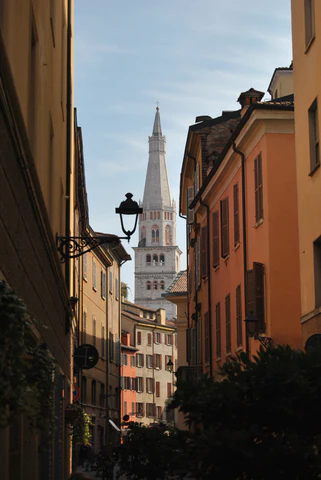
We take a pleasant stroll around the square, admire the Duomo and the Ghirlandina, wave to la Bonissima and promise we’ll be back by lunchtime. Speaking of which—it’s time for coffee, not that there’s ever a wrong time for it. We head down Via Farini, with the Palazzo Ducale winking at us from afar. On the left, about halfway down, we step into the historic coffee roastery La Messicana.
The aroma wraps around us. The owner greets us politely, without interrupting his fascinating ritual. I put myself in my Canadian guests’ shoes and can’t help but smile. I think of all the times I’ve witnessed a Japanese tea ceremony and, though I never truly understood what was going on, I always admired those expert hands, the precise gestures, the focused expression of someone weaving the present with a distant, precious past.

It’s almost touching to hear a foreigner shyly order an “espreesso… macchiatto”, and it becomes downright delightful when they sip the divine liquid and comment: “Oh dear, so strong!” Anne squints, Carl laughs. This is followed by a full-blown photo report of the roasting machine, the empty cups on the counter, the rows of bean sacks stacked on shelves. The place fills up quickly, and we head back out.

We walk and window-shop; the next inevitable stop is Giusti. My guests listen with curiosity as I explain where the various wines come from, the cured meats, the different pasta shapes. Their eyes widen when I have them read the founding year on the black sign above the shop: 1605! We arrive at Piazza Roma—a few anecdotes for Anne, while Carl gets acquainted with Ciro Menotti. “Oh really? A military academy?” Of course—we’ve even got that.

Beneath the portico, a cooler and shaded atmosphere ushers us into the world of traditional balsamic vinegar.
The girls at the shop are always smiling, and within moments, they’ve arranged a series of different bottles on the table, like chess pieces on a board. I can almost sense a little thrill—can we really taste them? Not only that—for every spoonful, there’s an explanation, a tip, a recipe.

I’ll candidly admit, even if it sounds a bit touristy, I’m always fascinated by these tastings in the shop—and whenever I get the chance to visit an acetaia, I still get excited. I usually end up buying a bottle or two myself! The walk continues—I usually alternate between busy areas and more hidden corners. I like to imagine that, once they’re on their own, my guests will seek out some of the little gems I hinted at along the way.

One place I love to show off is Pasticceria San Biagio, one of the best in town. That red shop window is like a magnet—you spot it from afar and already know you’re doomed. “Okay, it’s lunchtime… wait, no! Maybe later for an afternoon snack… should we come back after we eat? Mmm, let’s check the opening times…”

Everything’s there: the tagliatelle cake always makes people smile, the rose cake makes them dream. The croccante from Fiumalbo transports you to the green mountains, and a couple of amaretti are the bare minimum to walk away with from this sweet circle of temptation. Personally, my fix is a little bag of four marrons glacés.

Of course, we haven’t reached the highlight yet—but we’re just minutes away. I still haven’t decided which entrance to Mercato Albinelli is best. I’d like to say one of the two iron gates, especially the one on Via Albinelli, but lately I’ve come to appreciate the view from the Galleria del Pane. What a riot of colors, what a feast of scents!

People at the market always seem happy. Anne is enchanted by everything. She notices the ladies with their shopping carts, and senses that this is more than a market—it’s a place of community. Carl, of course, has photographed every vegetable, the lady buying cheese, the elegant black signs.

It’s fascinating to see what people notice—like a mini social experiment: some spot the prices, some the number of organic products, others stop at the first stall and start sampling. Today’s tour is absolutely thorough—we’ve missed nothing! We even treat ourselves to an aperitivo.

Seated at the tall counter of the deli, Anne and Carl exchange knowing glances. I order for them.

Just enough time to say goodbye and give my final recommendations when the waitress arrives, passionately listing the selection of cold cuts and cheeses, carefully arranged on a rustic wooden board. Add to that some fresh bread, homemade chips, and two glasses of the best Lambrusco, bubbly and inviting. I know exactly what they’re thinking—because I often think the same myself: sometimes, you just know you’re in the right place.

You don’t have to come all the way from Canada to appreciate that—of course not. But I know my guests will remember this moment for a long time. I walk away.

Bye Anne, bye Carl—enjoy!

Official Website: EAT Modena, your street food experience

Modena Ghirlandina Tower

Memories of a Winter Morning in Modena

“Grandpa, grandpa, can you buy me Topolino?”

It’s a biting winter day of 1996. The sun shyly lights up my face—the face of a six-year-old boy.
In front of the historic Panini newsstand, right in the heart of Corso Duomo, I tug at my grandfather Italo’s heavy charcoal-colored coat with one hand, and with the other, I point at the wall of comic books, triggering the laughter of the newsstand owner: “That’ll be 2,800 lire!”
What joy—I loved Topolino! I don’t think I ever held anything else to my chest with such affection.

Guided by my grandfather’s knowing hand, we move a few meters down, stopping in front of the imposing façade of the Cathedral.
“Emmanuele, do you see those two big lions there, the ones holding up the columns with their strength? Well, they know whether you’ve been good or bad,” he says with a smile. “How was this week?” I open my mouth as wide as I can, making sure Grandpa hears me clearly: “Very good!”

“Well then, in that case, you may ride them!”
He lifts me up effortlessly and places me on the back of one of the two lions. The marble is freezing cold—I feel like I’m turning to ice—so I instinctively hug the column, pressing my cheek against it. My eyes look forward, admiring the Christmas lights already in place, ready to welcome the season.

Women wrapped in soft furs hurry past, chatting excitedly about who knows what. A trolleybus screeches its cables overhead. Grandpa Italo turns to greet a couple of friends riding tall, slim bikes with classic curves. He was always chatting with someone, Grandpa! It felt like he knew everyone in the city center. “Grandpa, I’m cold—can we go now?!”

We walk along the perimeter of the Duomo, down Calle dei Campionesi, opening onto Piazza Grande, the heart of Modena. I hop from cobblestone to cobblestone, trying not to step on the cracks. Patiently, Grandpa holds my hand, matching my rhythm, always smiling. How do grandparents have so much patience? Even today, I still can’t understand it.

My hopping stops when Grandpa encourages me to follow his pointing finger upward. I have to tilt my head all the way back to find the top of the Ghirlandina, the tallest bell tower in the city. “What do you notice, Emmanuele? What’s unusual about our tower?”
“It’s all white!” I say. Grandpa laughs: “Come, let me show you something.”

We move closer to the corner of the portico. He places both of his wise hands on my shoulders, positioning me next to a column, facing the Ghirlandina. “Now look—first at the column, then at the tower.” I squint, comparing the lines of the tower with the straight column.
“It’s leaning! The Ghirlandina is falling over!” I exclaim, thrilled with my discovery.

Every time Grandpa takes me on a walk through the city center, he helps me discover something new. Every time, it’s a different adventure—perhaps because Modena really is full of stories and wonders. So many peoples have lived here, after all! As we walk along Via Emilia, Grandpa tells me how the road was built thousands of years ago by the Romans. “Were the Romans really that clever, Grandpa?”
“Very clever—but also a little mean, because before them, the Etruscans lived here.” What strange names, I think to myself.

My head swings from side to side as my eyes try to capture every movement, every gesture, every color in a city that feels busy, festive, alive. Suddenly, Grandpa stops—and so do I, naturally attached to his arm like an extension of it. We’re at the intersection with Via Farini. I lean forward to glimpse the majestic lines of the Military Academy, which, on another walk, Grandpa told me used to house many famous people.

“See, Emmanuele? Right here, this is the exact center of the city. That spot—right there, in the middle of the crossing.”
“Grandpa, Grandpa! Can I jump on it?!” He laughs: “Of course—but watch out for the bikes!” I start hopping, as if pressing an invisible button hidden in the center of the city. And maybe I do press something—because a small snowflake lands gently on my nose.

Yes, Christmas is really on its way.

Reggio Emilia

Free Walking Tour, the authentic way to experience the city

Alberto Pioppi, sociologist, shares his personal approach to experiencing the city and offers some insights on how to “read” urban spaces.

Ever since that day when our Urban Sociology professor told us: “Dear students, I’ll be away for two weeks. In the meantime, here’s your assignment: go to the places you frequent in your daily life, but observe them differently than usual. Use the curious gaze of a flâneur and write down in your notebook everything that stands out to you—be it a group of people, a note scribbled on a wall, a shop, or a street name.” — that’s when I realized this would become my way of understanding the world.

So, what is a flâneur? It’s a figure created by Baudelaire to describe someone who strolls through the city, seemingly aimless, yet emotionally engaged with the urban landscape. In my work as a sociologist and educator, observation and listening always play a central role. Observing individual and collective behavior, listening to people’s stories and the stories of places, interpreting the meaning of things—both objectively and subjectively. When I ask my students in tourism promotion courses to describe their own neighborhood, after an initial moment of confusion, they begin to “see” everything differently—those everyday situations they had never really noticed before suddenly gain new meaning. And when they interview local residents—often their own neighbors—they unexpectedly enter a world rich with history and personal narratives. For the first time, they begin to read their own living environment in a new light.

This is increasingly how tourists behave as well. Even those who, for various reasons, spend just a few days in a city like Reggio Emilia often feel the need to get under its skin. Alongside the many beautiful historical sites, there is a growing desire to understand the everyday history, to live experiences and emotions as if they weren’t tourists. That is the core philosophy of the Free Walking Tour—something I immediately connected with. It’s what I’ve always done, albeit in different contexts: schools, professional training courses, and the urban geo-explorations organized by the association I’m part of. It’s clear how hungry people are for micro-stories—the small details that allow them to walk away with a visceral understanding of a place.

Last Saturday, at the end of the tour, a young woman from Turin told me: “Thank you for making us feel like locals for two hours.”
Another woman was surprised to learn the unique history of the square where she often spends time with friends, sipping a glass of wine. These two simple anecdotes capture the entire meaning of this form of participatory tourism: feeling part of something you don’t normally live, and seeing a familiar place in a new light.

One thing’s for sure: the next time I visit a city, whether in Italy or abroad, I’ll be joining a Free Walking Tour.

Free Walking Tour reggio Emilia group

Free Walking Tour Reggio Emilia, we root for rebellion

We are pleased to publish our response to the statement issued by local guides and published in the local editions of Il Resto del Carlino and Gazzetta di Reggio on November 18, 2018.

The so-called “revolt” of the tour guides in Reggio Emilia did not come as a surprise to us. Let’s be honest—we expected it. It has become something of a ritual that has accompanied our activities for years now. This is not the first time, and it certainly won’t be the last. What disappoints us is that the same script keeps playing out over and over again.

And yet, a simple conversation would have been enough to resolve the doubts. The Free Walking Tour didn’t arrive in Reggio Emilia out of nowhere: the project was publicly presented on September 29th during an open event in the city. In the weeks that followed, some attempts were made to initiate dialogue with local guide associations. Furthermore, the initiative was widely promoted through local media—and we’d like to personally thank the local tourism office (IAT) for helping spread the word.

Now, regarding the statements made: referring to us merely as “enthusiasts” unfortunately undermines our professionalism—and that of many others who, like us, work with dedication and passion on this project, which has grown steadily in recent years and led to the creation of Italy’s first national Free Walking Tour network: Free Walking Tour Italia.

We firmly believe that culture should be accessible to everyone—regardless of social background, age, or income. That is why, alongside traditional cultural offerings (which we have no intention of undermining), we have begun organizing open-access events, where the service is provided regardless of the number of participants or the amount of financial compensation. This allows everyone, especially those who cannot or do not wish to book more traditional options, to connect with the city.

As for the Free Walking Tour Reggio Emilia specifically, while awaiting collaboration with licensed guides, we invited a local expert—already active in similar cultural initiatives—to curate a first series of events under our association’s banner. These events are time-limited and purposefully non-historical/artistic in focus, to avoid direct competition with other local professionals.

Moreover, to be precise, the regional tourism law allows for “the occasional exercise of activities pertaining to licensed tour guides, with prior notification, by recognized subject matter experts, within educational and informative initiatives promoting the artistic and cultural heritage of Emilia-Romagna, organized by public or non-profit organizations whose statutory purpose is the dissemination and enhancement of cultural heritage.”

Regarding professional ethics, we believe in free will: everyone is free to choose the format that better represents their profession. We simply do not assign a fixed monetary value in advance—we let people decide for themselves. And recognition, sooner or later, comes. The group of more than 30 people who joined us last Saturday in Reggio Emilia is proof of that.

Finally, we’d like to add a personal note: without diminishing the legitimacy of holding and defending a tour guide license, we believe that skills and competencies should be measured by their impact; that is their ability to offer and create culture, entertainment, services, and work opportunities. Otherwise, the profession risks becoming disconnected from the evolving needs of a rapidly changing public and territory, clinging to outdated positions. A certificate is not by itself a guarantee of professionalism. True professionalism is shown in the ability to interpret the present, innovate, and find new methods, ideas, and applications in a constantly evolving field.

Therefore, we believe that collaboration between professionals, competencies, and different stakeholders is more necessary now than ever to jointly tackle the cultural impoverishment of our society. This is not meant as a criticism, but rather an open and honest reflection.

Free Walking Tour in Reggio Emilia

Free Walking Tour Italia lands in Reggio Emilia

Yes, indeed. After the Emilia cities of Modena and Bologna, Reggio Emilia could not stand without its own Free Walking Tour. The project, promoted and organized by the association Same Same Travels and the platform Free Walking Tour Italia, was presented last September 30th as part of the IT.A.CÀ Festival in Reggio Emilia.

Thanks to the meeting with several local figures—most notably Alberto Pioppi, a sociologist who has long been dedicated to analyzing the connection between people and places—we decided to bring this new experiment to life. Once again, the Free Walking Tour presents itself as a ‘new’ cultural experience within the local context: the goal is to give everyone the opportunity to access and engage with the city, involving a variety of voices in the storytelling of its places. What sets this initiative apart is, above all, its ability to create relationships between people and the spaces they inhabit. For this reason, we’ve chosen not to impose any fee or restriction for participation, but instead to let people experience the tour freely and assign their own value to it.

This model helps break down barriers to access—be they financial or logistical— fosters participation, and promotes a free and authentic cultural approach, involving more and more people in engaging with the territory.

For more information:
Free Walking Tour Reggio Facebook

Free Walking Tour Reggio Instagram

Official Website – Free Walking Tour Reggio

ITACA Reggio Emilia

Free Walking Tour Italia goes to I.TA.CA Festival in Reggio Emilia

On Saturday, September 29, Free Walking Tour Italia will be ivited by IT.A.CÀ – the traveling festival of responsible tourism – in Reggio Emilia. At the Labart space, we will join a public talk titled “Free Walking Tour: A Complementary Model of Tourism Development,” focusing on networking, accessibility, and local communities.

Following the discussion, Alberto Pioppi, a sociologist, will guide attendees and anyone interested in discovering the transforming city.
The walk, titled “Paths of the Past, Places of Today,” invites reflection on the duality between unchanging urban structure and the transformation of places. While urban shapes and ancient paths have largely remained intact, the same cannot be said for the places themselves, understood as spaces of social and identity-based interaction. With an attentive eye, this walk offers the chance to breathe in the past and interpret the present.

The aim is to promote ‘free’ forms of engagement with local communities and foster new narratives, through the involvement of local actors, towards a more responsible and conscious tourism. The event is open to all citizens, as well as tourism professionals, tour guides, and local institutions. We hope this marks the beginning of a shared journey with the city of Reggio Emilia.

For more information about the event [LINK]

Need some Help?
Design Escapes

Free Walking Tour Italia is a property of Same Same SRL. We are small company based in Modena, VAT 03826270369

About

Copyright © - Free Walking Tour Italia
Privacy Policy Cookie Policy